
What We See, What God Sees
Supporting Scripture: Romans 8:28, 38–39
Introduction: Reality Changes Depending on How We See It
The same event can be understood differently depending on our perspective. We often interpret situations through our experiences, emotions, needs, and judgments. When something does not happen as we expect, we may conclude that something has gone wrong.
However, our understanding does not always agree with God's will. John 11 reveals the difference between the human perspective and God's perspective through the death and resurrection of Lazarus.
First, We Must Look Beyond Our Present Circumstances and See God's Greater Plan.
1. From a human perspective, it was a time of suffering and death.
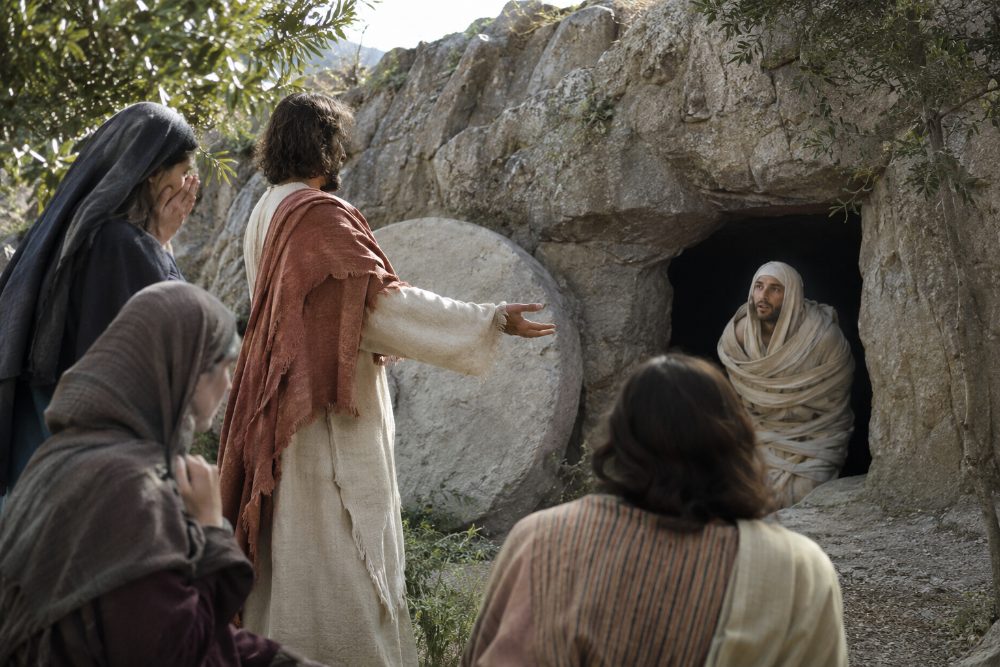
When Lazarus became sick, Martha and Mary sent word to Jesus. Although Jesus loved the family, He did not go immediately. Instead, He remained where He was for two more days (John 11:3–6).
From a human perspective, this delay was difficult to understand. Lazarus eventually died. Both Martha and Mary told Jesus that their brother would not have died if He had been there (vv. 21, 32).
For the family, the immediate reality was suffering, sorrow, and death.
2. But Jesus saw the life that would be revealed through the event.
Jesus had already declared that this sickness would serve God's glory (v. 4). He also expressed joy for the disciples' sake because they would believe (v. 15). He was not rejoicing over Lazarus's death but over the faith that would result from what God was about to accomplish.
Before raising Lazarus, Jesus thanked the Father (v. 41). Lazarus was raised, and many who witnessed what happened believed in Jesus (vv. 43–45).
From a human perspective, it was a time of suffering and death. From God's perspective, it became a time when many people were led toward life through faith in Jesus.
The raising of Lazarus also pointed ahead to the resurrection of Jesus Christ.
3. Jesus' love looked toward God's greater plan.
Jesus did not ignore human suffering in order to accomplish God's purpose. Scripture tells us that He loved this family (v. 5), was deeply moved by their grief, and wept (vv. 33–35).
Jesus' love responded to their suffering, but it was not limited to resolving their immediate pain. He also saw God's greater plan, through which many people would come to believe and receive life.
Second, We Must Not Place Our Own Judgment and Greater Causes Above God's Will.
1. The religious leaders made a political judgment even after the miracle of resurrection.
Many people believed in Jesus after Lazarus was raised, but the chief priests and Pharisees called a meeting of the council (vv. 45–47).
They feared that Roman authorities would take away their temple and nation if Jesus continued gaining followers (v. 48). Caiaphas argued that it would be better for one man to die for the people (v. 50).
Faced with the news that a dead man had been raised, they decided to kill Jesus.
2. Becoming consumed by a cause can lead us to oppose God's will.
The religious leaders believed they were acting for the good of their nation. Yet the person they intended to kill was the Son of God.
John explains that Jesus' death was connected to God's redemptive purpose, even though the leaders did not understand what they were doing (vv. 51–52).
When we become convinced that our own judgment or cause is absolutely right, we may oppose God's will and cause suffering to others.
We must seek God's will rather than treat our own opinions as the final authority.
Third, We Must See Our Lives from God's Perspective Even in Suffering.
1. Times of suffering can also be used within God's plan.
The illness and death of Lazarus brought tremendous sorrow to his family. Yet through that event, many people came to believe in Jesus (John 11:45).
Joseph was betrayed by his brothers, sold into slavery, and imprisoned unjustly. Yet God used him to preserve many lives. Joseph later acknowledged that although his brothers had intended harm, God had turned their actions toward good (Genesis 50:20).
Paul was imprisoned for proclaiming the gospel, yet he recognized that his imprisonment had actually advanced the gospel (Philippians 1:12–14).
The early church suffered persecution and believers were scattered, but those who were scattered preached the gospel wherever they went (Acts 8:1–4).
From a human perspective, these events appeared to be times of suffering, failure, and crisis. Yet God used them as opportunities for life and the gospel to reach others.
Above all, the cross of Jesus Christ reveals how God brought salvation through suffering and death.
2. The life of a Christian is held in God's hands.
Suffering is still painful. It can be so difficult that we would rather never experience it.
But we must remember that those who have been saved through Christ are held securely in God's hands.
Romans 8:38–39 declares that neither death nor life nor anything else in all creation can separate us from God's love in Christ Jesus.
Romans 8:28 teaches that God works all things together for good for those who love Him and are called according to His purpose.
This does not mean that every difficulty will end in the way we desire. Rather, suffering and even death cannot take away the eternal life and victory we have in Christ.
Therefore, let us not give up when life becomes difficult. Instead of remaining trapped within our limited perspective, let us lift our eyes toward God, just as someone steps outside and looks toward the rising sun.
Conclusion: Change Your Perspective.
What we can see is not the whole picture. God knows our suffering and continues to accomplish His good purposes in our lives.
This week, let us seek God's will instead of relying only on our own experiences and judgments.
Let us face life from God's perspective and look toward the eternal victory He will accomplish.
Discussion Questions
- How did Jesus respond when He heard that Lazarus was sick? (John 11:3–6)
- What did Jesus say would result from Lazarus's death, and what happened after Lazarus was raised? (John 11:4, 15, 41–45)
- Why did the religious leaders decide to kill Jesus after Lazarus was raised? (John 11:47–53)
- How was the family's perspective on Lazarus's death different from the greater purpose Jesus saw?
- How does the decision of the religious leaders reveal the danger of placing our own judgments and causes above God's will?
- How do the experiences of Joseph, Paul, and the early church connect with the promise of Romans 8:28?
- What difficulty in your life are you currently viewing only from your own perspective?
- Is there an area where you may be placing your opinions or sense of being right above seeking God's will?
- What decision will you make this week to seek God's will and trust Him during difficulties?
Past sermon notes
View all ›| Sunday | Title |
|---|---|
| 2026.11.01 | I Am the Door of the Sheep and the Good Shepherd |
| 2026.10.25 | Whose Sin Was It? |
| 2026.10.18 | Fulfilling Our Mission by Following God's Calling |
| 2026.10.11 | The Holy Spirit who provides living water |
| 2026.10.04 | 우리가 기도하는 교회 |
| 2026.09.27 | 기적에 머물 것인가, 사명으로 나아갈 것인가 |
- I Am the Door of the Sheep and the Good Shepherd2026.11.01
- Whose Sin Was It?2026.10.25
- Fulfilling Our Mission by Following God's Calling2026.10.18
- The Holy Spirit who provides living water2026.10.11
- 우리가 기도하는 교회2026.10.04
- 기적에 머물 것인가, 사명으로 나아갈 것인가2026.09.27